Description
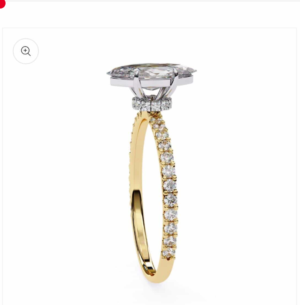
4 Carat Oval Lab Diamond Engagement Ring – Pave Band, 14K Yellow Gold
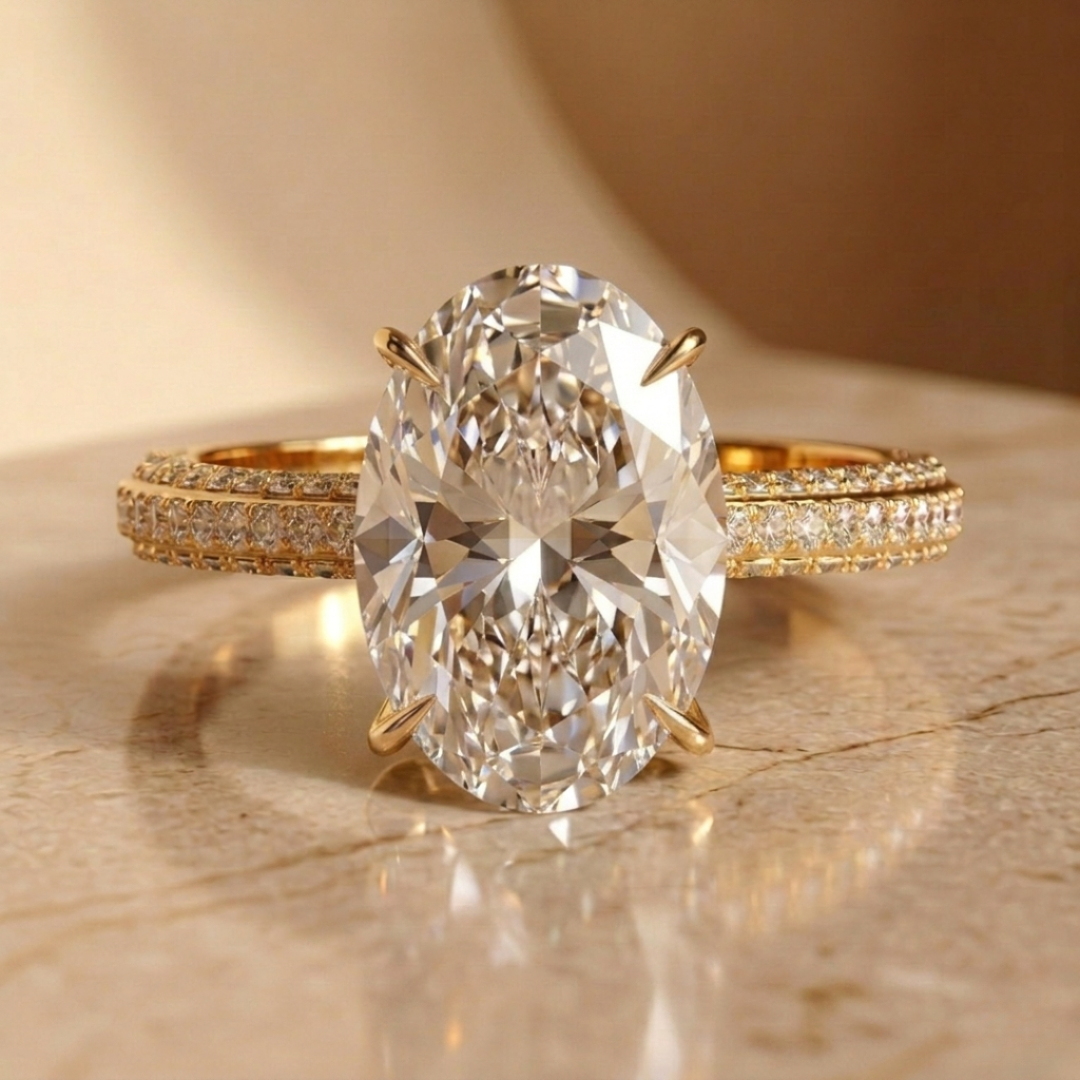
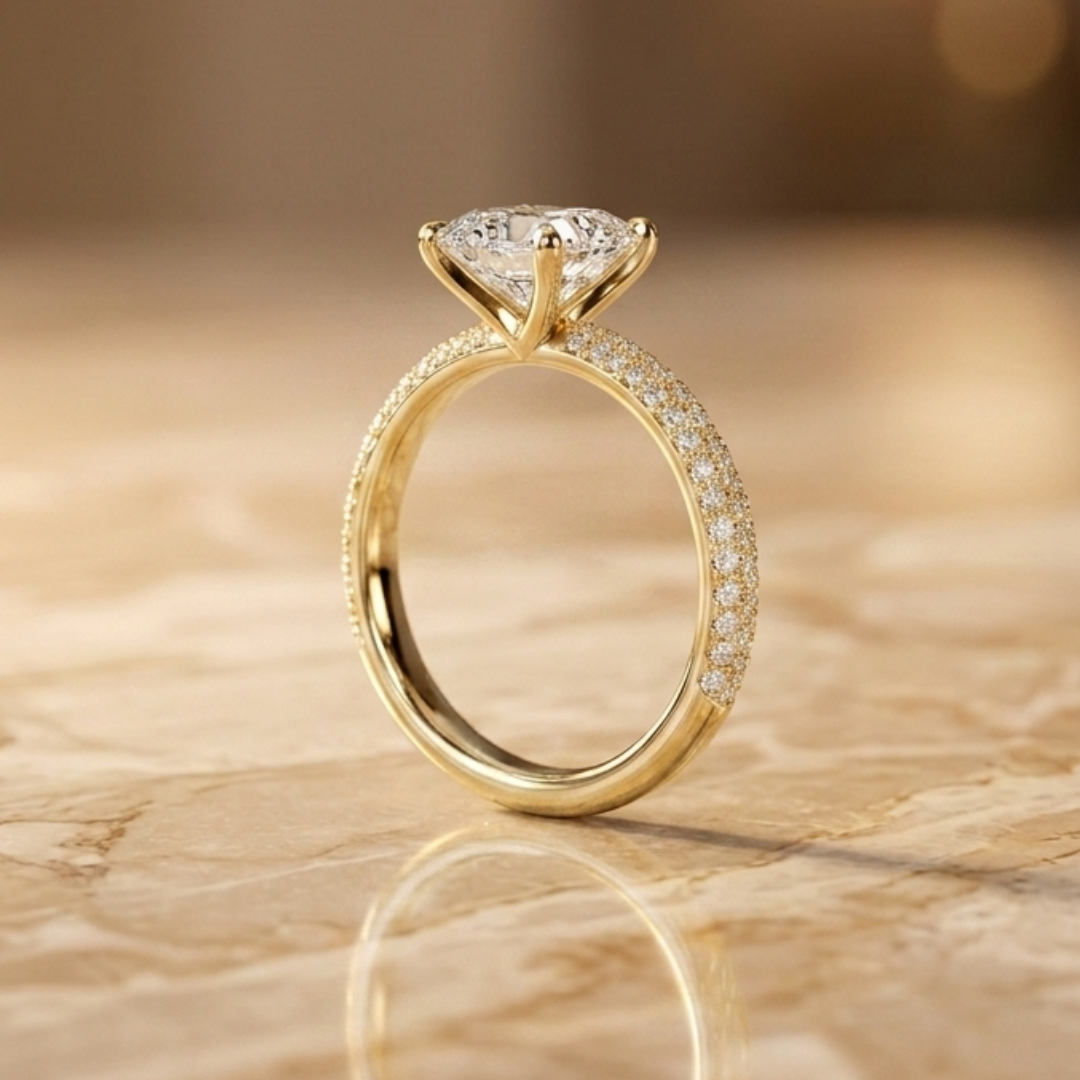
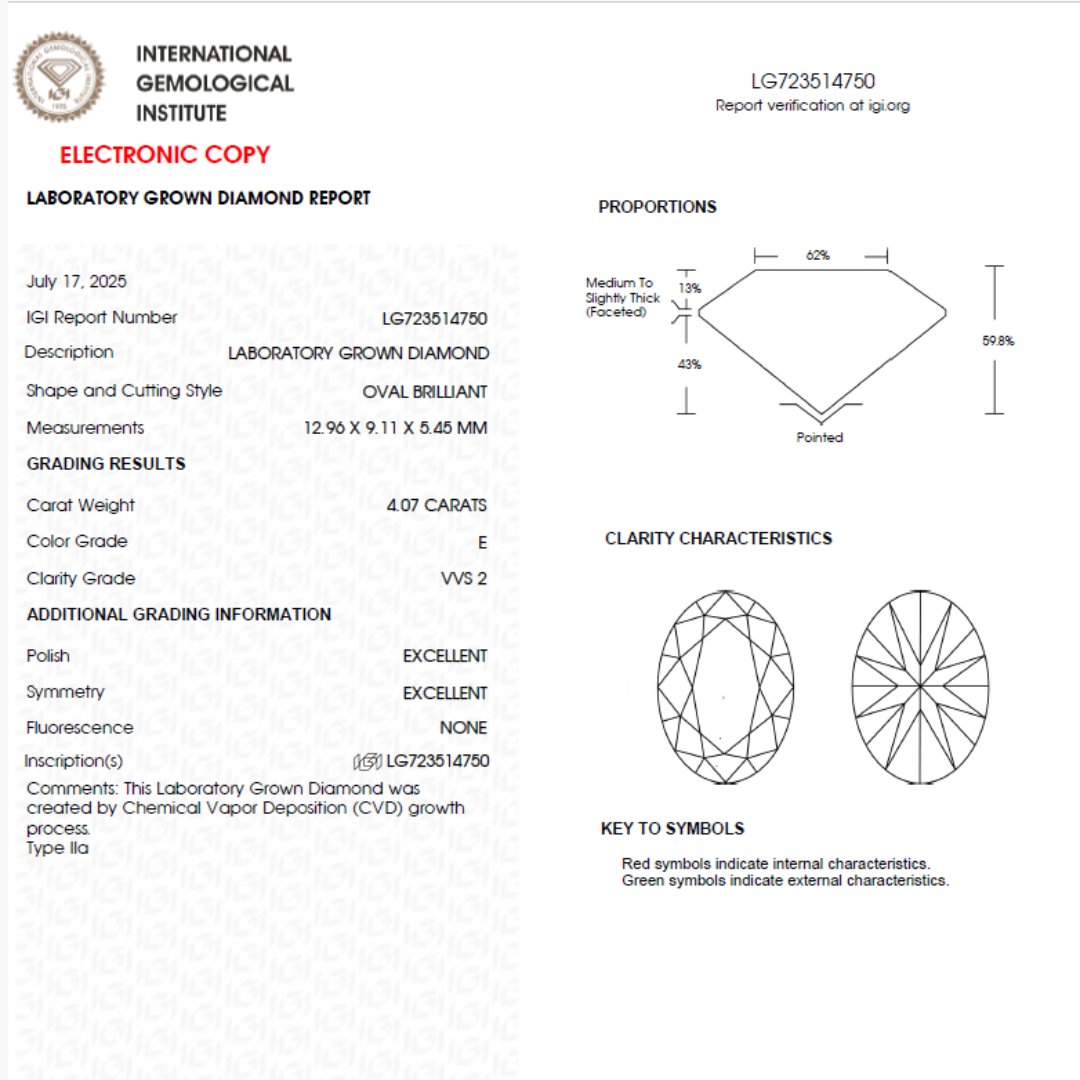
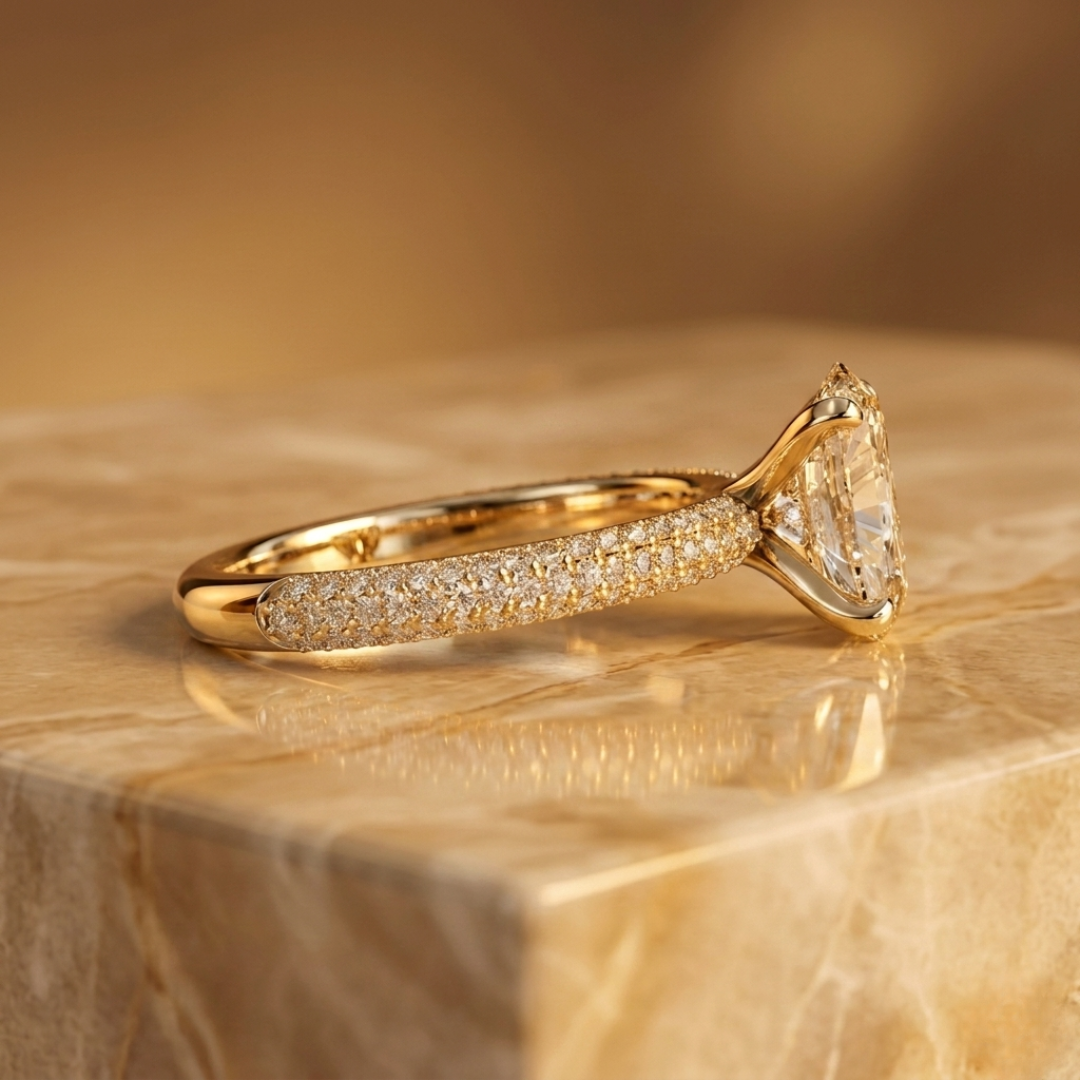
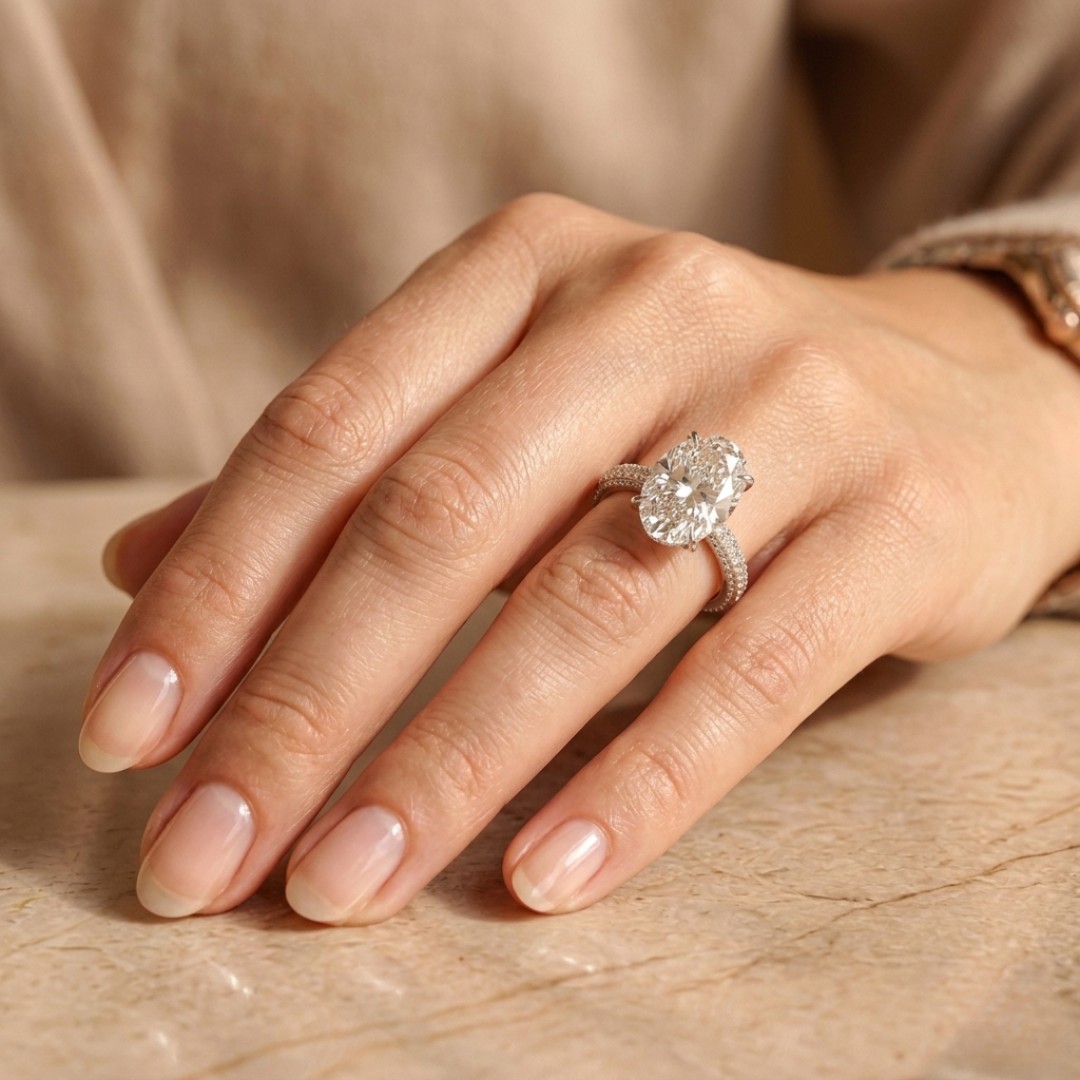
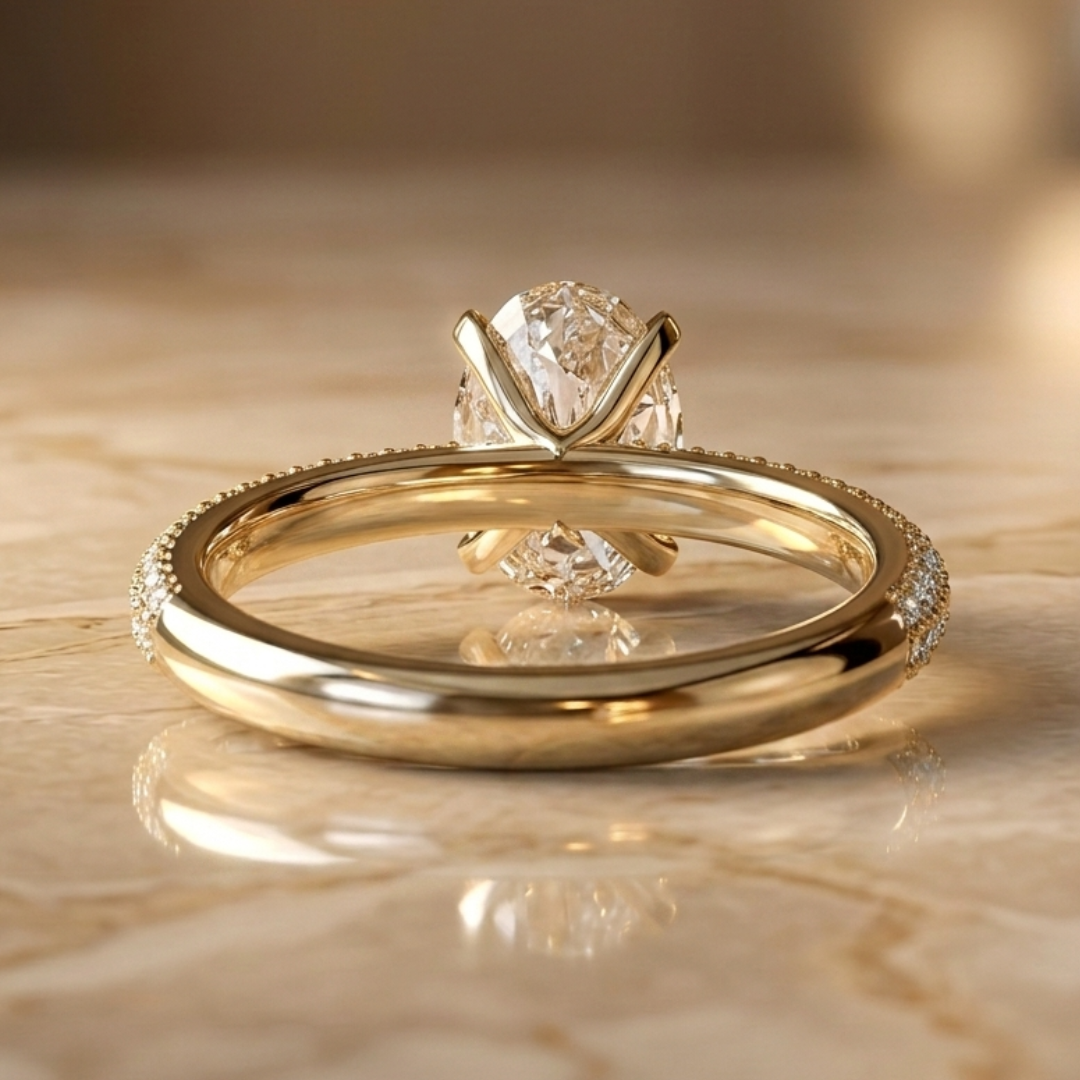
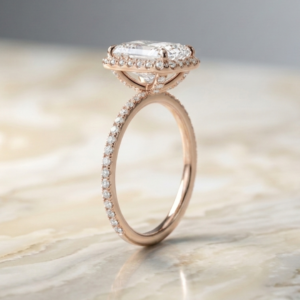
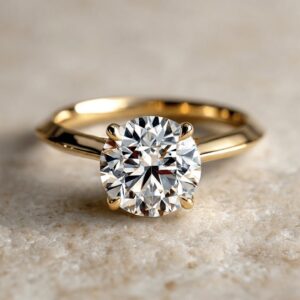
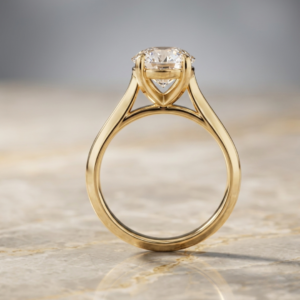
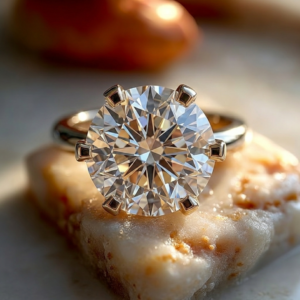
This ring is built around a 4.0 carat oval lab diamond — a genuinely large center stone at the upper end of engagement ring sizing. The oval cut at 4 carats has a face-up measurement typically in the range of 12 to 13mm along its length, which is visually substantial and immediately commanding on the finger. The center diamond is graded E color and VVS2 clarity, IGI certified. At this carat weight, quality grades carry more visual consequence than they do on smaller stones — a 4ct oval with a visible inclusion or warm tint would be apparent; E/VVS2 ensures neither issue applies. The pave band adds 110 round brilliant diamonds (E/VS1, 0.75ct total), running continuously along the shank and bringing total diamond weight to 4.75 carats. The band is 14K yellow gold with a 2.50mm shank width — substantial enough to visually anchor the large center stone.
Diamond Specifications
- Center Stone: 4.0 carat oval brilliant lab-grown diamond
- Color: E — colorless, second grade on the GIA scale
- Clarity: VVS2 — inclusions invisible to the naked eye, extremely small under magnification
- Certification: IGI certified
- Pave Band: 110 round brilliant diamonds, E color VS1, 0.75 carat total
- Total Carat Weight: 4.75 carats
Ring Specifications
- Setting Style: 4-prong solitaire with pave band
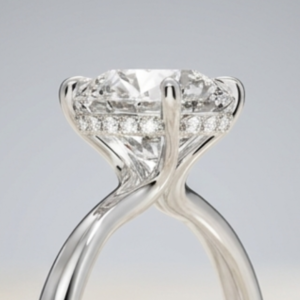
- Prongs: 4 claw prongs
- Shank Width: 2.50mm
- Metal: 14K Yellow Gold
- Finish: High-polish
- Sizing: Made to order in your size
What’s Included
- ✔ IGI gemological certificate
- ✔ Professional appraisal certificate
- ✔ Luxury ring box
- ✔ Free insured FedEx shipping
- ✔ 30-day return policy
- ✔ Lifetime warranty
Why This Design Works
Four carats is a meaningful threshold. Most engagement rings sold globally are between 0.75 and 1.5 carats; the average in the United States is approximately 1.0 to 1.2 carats. A 4 carat oval is more than three times that average — it is a deliberate statement, chosen for maximum presence. The oval cut is the right shape for this: its elongated outline distributes the carat weight across a larger face-up area than a round of the same weight, and the length-to-width ratio creates a visual elongation on the finger that makes an already large stone appear even more prominent.
E color and VVS2 clarity at 4 carats is the correct specification. At this size, the stone is large enough that any visible tint or inclusion would be immediately noticeable — the E/VVS2 combination ensures neither issue exists. The 110-diamond pave band with 0.75ct of additional stones creates a ring that is brilliant from every angle, not just face-up, and the 2.50mm band width provides the visual weight needed to balance a center stone of this size. In yellow gold, the warm metal creates a vivid contrast with the E color center that emphasises the diamond’s brightness.
Frequently Asked Questions
How big does a 4 carat oval diamond actually look?
A 4.0 carat oval diamond typically measures approximately 12 to 13mm along its length and 8 to 9mm across its width, depending on the specific cut proportions. For reference, a US quarter is 24mm in diameter — a 4ct oval is roughly half that length. On the finger, the oval’s length runs along the finger, making the stone appear even larger than its diameter suggests. This is a genuinely substantial diamond — significantly larger than the 1–1.5ct range that represents the majority of engagement ring purchases.
Why does quality grade matter more at higher carat weights?
A larger diamond has a larger table (the flat top facet) and larger facets overall, which means there is more area through which inclusions and colour tints can be observed. An inclusion that would be invisible in a 1ct VS2 diamond can be visible in a 4ct VS2 at the same position, because the facets magnifying it are proportionally larger. Similarly, a warm tint that might be imperceptible in a 1ct H color diamond becomes more detectable in a 4ct H. For diamonds above 3 carats, VS1 or better clarity and F or better color are the standard recommendations for a visually clean stone.
What does E color VVS2 mean?
E is the second-highest grade on the GIA color scale (D is first). Both are in the colorless range — no warmth or yellow tint is detectable even under laboratory conditions. VVS2 (Very Very Slightly Included, second degree) is the fourth grade from the top of the clarity scale. Inclusions are microscopic and require high magnification and a trained grader to locate. The stone is entirely eye-clean. At 4 carats, E/VVS2 is the specification that ensures the stone’s size works for it rather than against it — the quality is high enough that the scale of the diamond only makes it more impressive.
Why does this ring have 110 pave diamonds?
A 2.50mm band on a ring this size requires more stones to cover it than a 1.5mm band on a smaller ring. The 110 diamonds in the pave band are small — each a fraction of a carat — but together they add 0.75 carats of diamond weight and create a band that is fully brilliant along its entire length. The high stone count is a function of the shank width and the desire for continuous, uninterrupted sparkle. A center stone of 4 carats requires a band that can visually match its scale; 110 pave stones across a 2.50mm shank achieves that.
Why yellow gold for a large oval diamond?
Yellow gold creates a warm contrast with colorless diamonds that makes the stone appear particularly bright and vivid. At 4 carats, the large face-up area of the oval means the contrast between gold and diamond is very visible and very effective — the E color stone looks strikingly white against the warm band. Yellow gold is also historically the metal associated with significant diamond jewelry; large statement pieces have traditionally been set in yellow gold. The 14K alloy is durable enough for daily wear and maintains its colour permanently without re-plating.
Can I change the metal or center stone size?
Yes. This ring can be made in 14K or 18K gold in yellow, white, or rose, or in platinum. The center stone size can also be adjusted — we can build this design from 2 to 6 carats. Contact us before ordering — call 917-477-8663 or message through the site.
Is a lab-grown diamond a real diamond?
Yes — chemically and physically identical to a mined diamond. Same carbon crystal structure, same hardness of 10, same refractive index and light performance. The only difference is origin. At 4 carats, a lab diamond offers the same visual impact and the same IGI certification as a mined stone, at a fraction of the mined price. This diamond comes with an IGI certificate confirming its cut, colour, clarity, and carat weight.
How long until I receive my ring?
Each ring is handcrafted to order. Standard production is 10–14 business days, then ships via free insured FedEx. If you need it by a specific date, contact us before ordering and we will confirm the timeline honestly.
Free Shipping
We’re proud to offer FREE FedEx® shipping on every order within the US and to 43 international countries.
Every Ariel Jewelry purchase qualifies for free expedited shipping. All shipments are fully insured and shipped via FedEx 2 Day. We require processing times of between 1-3 weeks depending on each ring and ring size so please consult with one of our experts for exact details. Since jewelry is often given for engagement or another special occasion, we will be extremely flexible to help you create a wonderful surprise. We can ship to the nearest FedEx location and have the package securely held for you to pick up or we can ship to an address other than your home to help you maintain your surprise.
Need it fast? Upgraded overnight service is available upon request for a nominal fee. We ship worldwide with FedEx International Priority. Delivery times are dependent on the country’s customs. Clients are responsible for duties and taxes.
Returns
100% Full Refund We stand behind every item we sell and we want you to experience total satisfaction with your purchase. If you are not 100% satisfied with your purchase, you may return it within 30 days for a full refund or exchange – no questions asked. Many retailers charge a restocking fee for returns; we don’t charge you a cent.
Reviews
There are no reviews yet.