We're celebrating our new website -
and you get. . .
and you get. . .
A special 10% Off!
Simply enter LAUNCH10 at checkout to redeem your discount. Don’t miss out on this limited time offer!
I get this question every week. And I always answer it the same way.
I sell both. I have no reason to push you either way. So here’s the honest version.
Let’s start here — because most people don’t know this.
A lab diamond and a natural diamond are chemically, physically, and optically the same. Same hardness. Same brilliance. Same fire. A gemologist cannot tell them apart with the naked eye. Even with equipment, it takes a specialised test.
So if you’re worried about “will it look fake” — it won’t. It looks exactly like a diamond. Because it is a diamond.
The only real difference is origin.
A natural diamond formed billions of years ago, deep inside the earth, under extreme heat and pressure. It was mined, cut, and certified. No two are exactly alike. Each one is a geological accident that took longer to form than human civilisation has existed.
A lab diamond is grown in a controlled environment over a few weeks. Scientists replicate the same conditions — same carbon, same pressure, same result. It’s real. It’s not synthetic. It’s not fake. It’s just made differently.
This is where it gets interesting.
Lab diamonds cost 50–70% less than natural diamonds of the same size and quality. That’s not a small gap.
What that means practically: with a $10,000 budget, you might choose between a 1.5ct natural diamond or a 3ct lab diamond — same quality grade, same cut, same certification.
That’s a real decision. And for a lot of couples, the lab diamond is the smarter move.
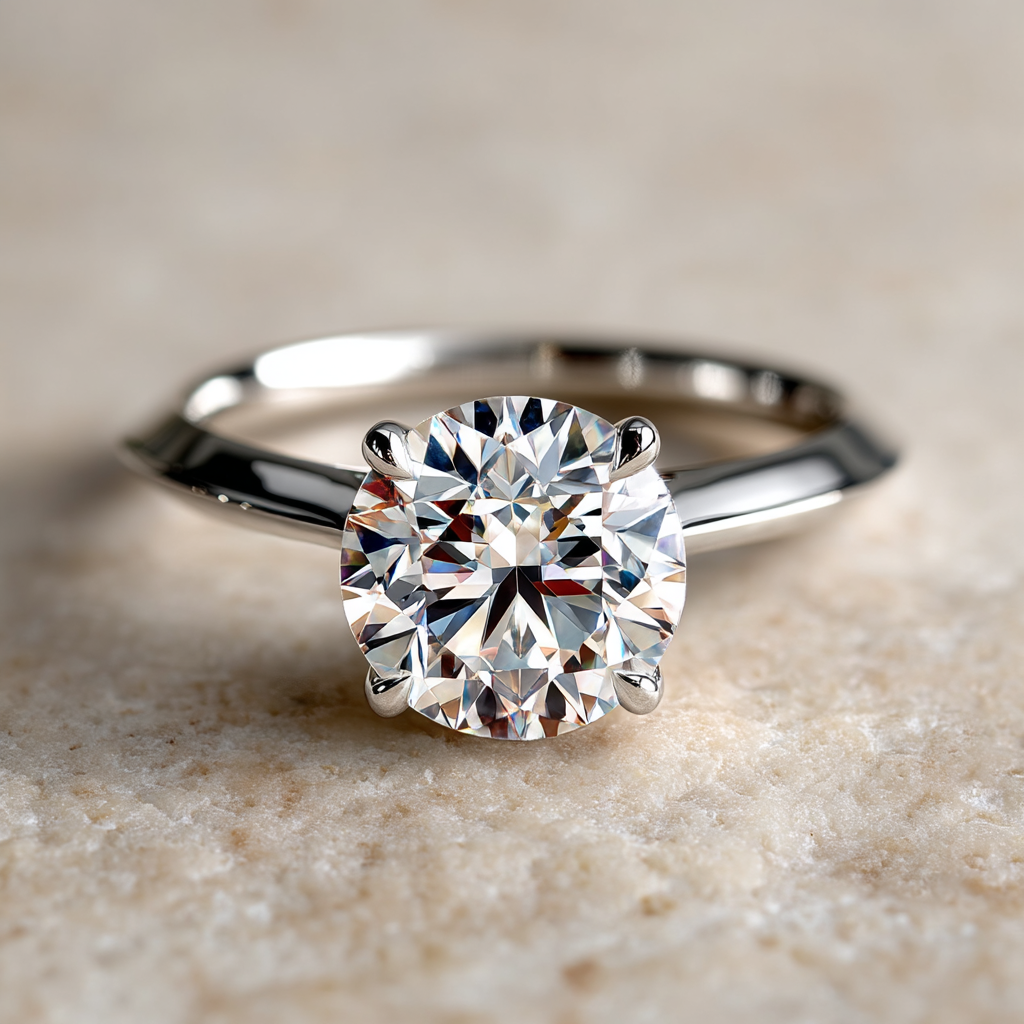
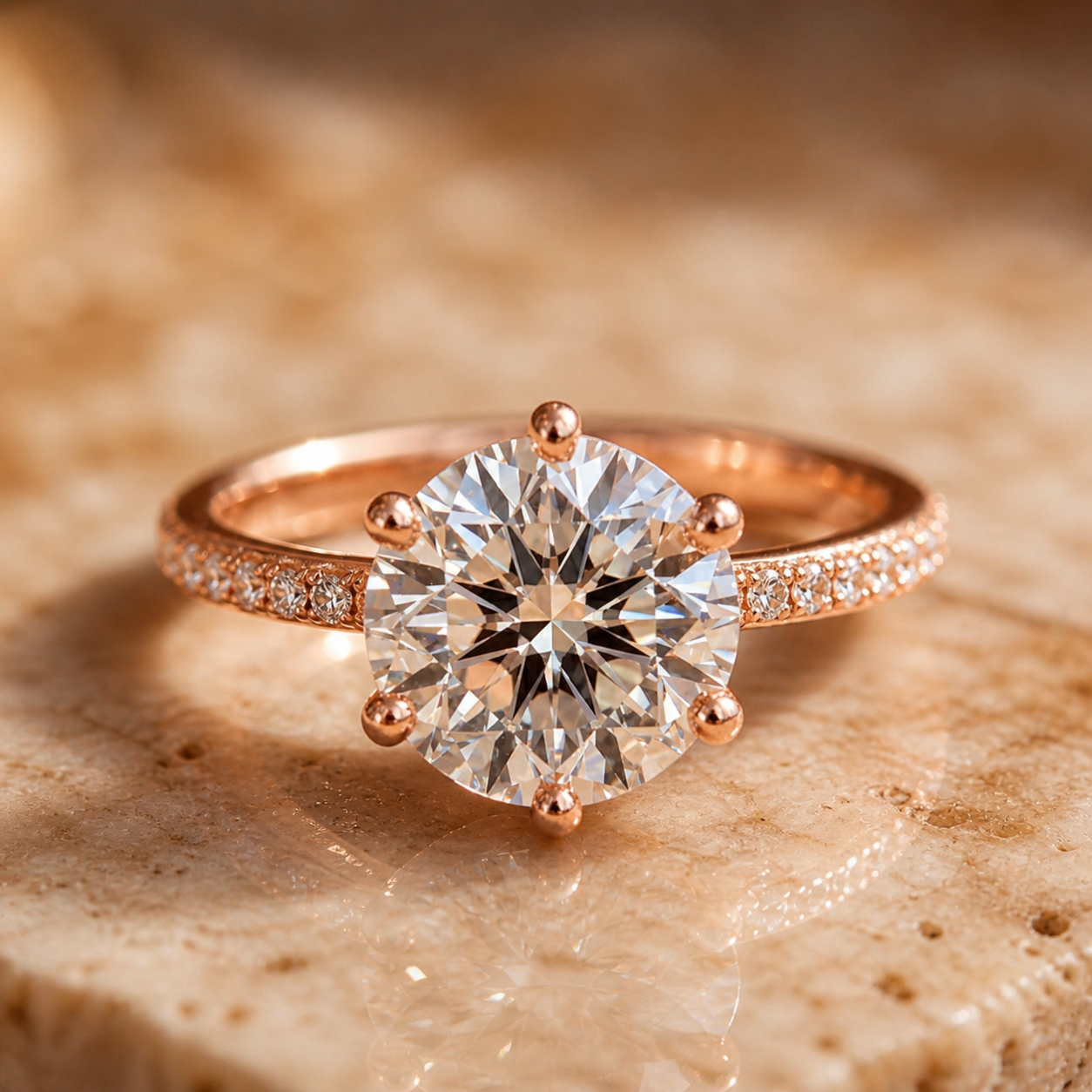
Rarity. Natural diamonds are finite. The earth isn’t making more of them. Lab diamonds can be produced in unlimited quantities — and prices have been falling every year as production scales up.
Value retention. Natural diamonds hold their resale value significantly better. Lab diamond resale value has dropped sharply as the market has grown. If long-term value matters to you, natural is the better choice.
The story. And this is the one that stays with me.
A client came to me a few years ago. She brought in her grandmother’s engagement ring — a simple solitaire, round cut, about a carat. Her grandmother had worn it every single day for 58 years. The band was worn thin. The setting was tired.
She didn’t want to sell it. She wanted to wear it.
We kept the diamond — that exact stone, the one her grandfather chose in 1961 — and rebuilt everything around it. New platinum band. New setting. The diamond recut and polished back to life.
She wore it to her own wedding six months later.
That’s not something you can do with a lab diamond grown last Tuesday.
It’s not just one story. It happens constantly in this business.
The Hope Diamond has passed through the hands of kings, collectors, and eventually a nation — it sits in the Smithsonian today, billions of years old, still the same stone. The Taylor-Burton Diamond, a 69-carat pear shape, was bought by Richard Burton for Elizabeth Taylor in 1969. Decades later it still sells at auction for millions — because it’s that stone, with that history.
These are extreme examples. But the principle is the same for a 1-carat round in a white gold band.
A natural diamond bought today could be worn by your daughter. Reset by your granddaughter. Passed on again after that. Each generation adds a chapter to the same stone.
One of my clients told me something I think about often. He said: “I’m not just buying a ring. I’m starting something.”
That’s what a natural diamond is. The beginning of an heirloom.
A lab diamond is a beautiful stone. But it was made last month. It doesn’t carry time. And time — real, geological, irreplaceable time — is something no laboratory can manufacture.
Size for budget. A bigger, better stone for the same money. Full stop.
Ethical simplicity. Lab diamonds have no mining footprint. For couples who care about that — and many do — it removes any concern entirely.
Certified quality. Lab diamonds are graded by GIA and IGI exactly like natural stones. You get the same certificate, the same grades, the same guarantees.
We stock and source both. My father is a veteran diamond manufacturer — so for natural diamonds, we often start with our own production. For lab diamonds, we pull from a curated network to match your specs exactly.
When a client asks me “which should I get?” — I ask them three questions:
1. What’s your budget? If stretching for size matters, lab often wins.
2. Does long-term value matter to you? If yes, natural is more stable.
3. What does the ring mean to you? If the story behind the stone matters — that it’s ancient, unique, irreplaceable — natural. If the diamond itself is what matters and origin is secondary — lab is just as beautiful.
There’s no wrong answer. I’ve seen couples cry over both.
If budget is tight and size matters — go lab. You’ll get a stunning stone and no one will ever know the difference unless you tell them.
If budget allows and you want something with history, rarity, and long-term value — go natural. Right now especially, natural diamond prices are at some of the lowest levels in years. It’s a genuinely good time to buy.
If you’re not sure — talk to me. I’ll show you both side by side, with videos and certificates, at your budget. You’ll know immediately which feels right.
Have a question about which is right for your situation? Send me a message — no pressure, just honest guidance.
Find Your Size & Ring Match with Our Guide Size Chart
If you would like to measure your ring size immediately the quickest ways and with an accurate fit – you can do it with our Ring Size Chart here.
The way to quickly get your measurements is either going to the nearest jewelry shop and ask them to measure you, or to buy a Ring Sizer Measuring Gauge with a 2-day delivery to the US!
Then you can match your measurement to the size chart below to get your exact ring size.
A few factors we recommend to consider for the perfect measure:
Still not sure what your size is or what to choose for your love one? We’re here to help!
| MM | Inches | MM | Inches | UK/AU | US & Canada & Mexico | France | Germany & Russia & Ukraine & Asia | India & China & Japan & South America | Italy & Spain & Netherlands & Switzerland |
| 14.05 | 0.553 | 44.14 | 1.74 | F | 3 | 44 | 14 | 4 | 4 |
| 14.25 | 0.561 | 44.77 | 1.76 | F 1/2 | 3.25 | 44.625 | 14.25 | 4.5 | 4.625 |
| 14.45 | 0.569 | 45.4 | 1.79 | G | 3.5 | 45.25 | 14.5 | 5 | 5.25 |
| 14.65 | 0.577 | 46.02 | 1.81 | H | 3.75 | 45.875 | 14.75 | 6 | 5.875 |
| 14.86 | 0.585 | 46.68 | 1.84 | H 1/2 | 4 | 46.5 | 15 | 7 | 6.5 |
| 15.04 | 0.592 | 47.25 | 1.86 | I | 4.25 | 47.125 | 15.25 | 7.5 | 7.125 |
| 15.27 | 0.601 | 47.97 | 1.89 | I 1/2 | 4.5 | 47.75 | 15.5 | 8 | 7.75 |
| 15.53 | 0.611 | 48.79 | 1.92 | J 1/4 | 4.75 | 48.375 | — | 8.5 | 8.375 |
| 15.7 | 0.618 | 49.32 | 1.94 | J 1/2 | 5 | 49 | 15.75 | 9 | 9 |
| 15.9 | 0.626 | 49.95 | 1.97 | K 1/4 | 5.25 | 49.625 | 16 | 9.5 | 9.625 |
| 16.1 | 0.634 | 50.58 | 1.99 | L | 5.5 | 50.25 | 16.25 | 10 | 10.25 |
| 16.3 | 0.642 | 51.21 | 2.02 | L 1/4 | 5.75 | 50.875 | — | 11 | 10.875 |
| 16.51 | 0.65 | 51.87 | 2.04 | M | 6 | 51.5 | 16.5 | 12 | 11.5 |
| 16.71 | 0.658 | 52.5 | 2.07 | M 1/2 | 6.25 | 52.125 | 16.75 | 12.5 | 12.125 |
| 16.92 | 0.666 | 53.16 | 2.09 | N | 6.5 | 52.75 | 17 | 13 | 12.75 |
| 17.13 | 0.674 | 53.82 | 2.12 | N 1/2 | 6.75 | 53.375 | — | 13.5 | 13.375 |
| 17.35 | 0.683 | 54.51 | 2.15 | O | 7 | 54 | 17.25 | 14 | 14 |
| 17.45 | 0.687 | 54.82 | 2.16 | O 1/2 | 7.25 | 54.625 | 17.5 | 14.5 | 14.625 |
| 17.75 | 0.699 | 55.76 | 2.2 | P | 7.5 | 55.25 | 17.75 | 15 | 15.25 |
| 17.97 | 0.707 | 56.45 | 2.22 | P 1/2 | 7.75 | 55.875 | — | 15.5 | 15.875 |
| 18.19 | 0.716 | 57.15 | 2.25 | Q | 8 | 56.5 | 18 | 16 | 16.5 |
| 18.35 | 0.722 | 57.65 | 2.27 | Q 1/2 | 8.25 | 57.125 | 18.25 | 16.5 | 17.25 |
| 18.53 | 0.729 | 58.21 | 2.29 | Q 3/4 | 8.5 | 57.75 | 18.5 | 17 | 17.75 |
| 18.69 | 0.736 | 58.72 | 2.31 | R 1/4 | 8.75 | 58.375 | 18.75 | 17.5 | 18.375 |
| 18.89 | 0.748 | 59.34 | 2.35 | R 3/4 | 9 | 59 | 19 | 18 | 19 |
| 19.22 | 0.757 | 60.38 | 2.38 | S 1/4 | 9.25 | 59.625 | 19.25 | 18.5 | 19.625 |
| 19.41 | 0.764 | 60.98 | 2.4 | S 3/4 | 9.5 | 60.25 | 19.5 | 19 | 20.25 |
| 19.62 | 0.772 | 61.64 | 2.43 | T 1/4 | 9.75 | 60.875 | 19.75 | 19.5 | 20.875 |
| 19.84 | 0.781 | 62.33 | 2.45 | T 1/2 | 10 | 61.5 | 20 | 20 | 21.25 |
| 20.02 | 0.788 | 62.89 | 2.48 | U | 10.25 | 62.125 | 20.25 | 21 | 22.125 |
| 20.2 | 0.797 | 63.46 | 2.5 | U 1/2 | 10.5 | 62.75 | 20.5 | 22 | 22.75 |
| 20.44 | 0.805 | 64.21 | 2.53 | V 1/4 | 10.75 | 63.375 | — | 22.5 | 23.375 |
| 20.68 | 0.814 | 64.97 | 2.56 | V 1/2 | 11 | 64 | 20.75 | 23 | 24 |
| 20.85 | 0.821 | 65.5 | 2.58 | W 1/4 | 11.25 | 64.625 | — | 23.5 | 24.625 |
| 21.08 | 0.83 | 66.22 | 2.61 | W 3/4 | 11.5 | 65.25 | 21 | 24 | 25.25 |
| 21.24 | 0.836 | 66.73 | 2.63 | X 1/4 | 11.75 | 65.875 | — | 24.5 | 25.875 |
| 21.49 | 0.846 | 67.51 | 2.66 | Y | 12 | 66.5 | 21.25 | 25 | 26.5 |
| 21.69 | 0.854 | 68.14 | 2.68 | Y 1/2 | 12.25 | 67.125 | 21.5 | 25.5 | 27.125 |
| 21.89 | 0.862 | 68.77 | 2.71 | Z | 12.5 | 67.75 | 21.75 | 26 | 27.75 |
| 22.1 | 0.87 | 69.43 | 2.73 | Z +1/2 | 12.75 | 68.375 | — | 26.5 | 28.375 |
| 22.2 | 0.75 | 70 | 2.74 | Z+1 | 13 | 69 | 22 | 27 | 29 |
Simply enter LAUNCH10 at checkout to redeem your discount. Don’t miss out on this limited time offer!