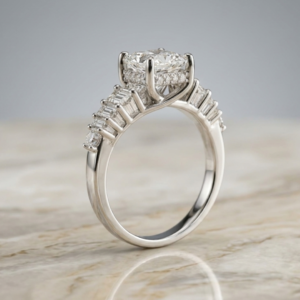
We're celebrating our new website -
and you get. . .
and you get. . .
A special 10% Off!
Simply enter LAUNCH10 at checkout to redeem your discount. Don’t miss out on this limited time offer!
I’ve been in the diamond business my whole life. Second generation. And right now, I’m seeing something I haven’t seen in years.
Natural diamond prices are down. Significantly.
If you’ve been thinking about buying an engagement ring — or any natural diamond jewellery — this matters to you. A lot.
Let me explain what’s happening and what it means for your budget.
Over the last 2–3 years, lab-grown diamonds flooded the market. They’re cheaper to produce and widely available. As a result, many buyers shifted toward lab stones — and the demand for natural diamonds softened.
When demand softens, prices follow.
That’s simple economics. And right now, it means you can get a bigger, better natural diamond for the same budget you would have had 3 years ago.
I’m not saying this as a sales pitch. I’m saying it because I see the numbers every week when I’m sourcing stones for clients.
I’m not anti-lab. We offer both, and I’ll always tell you honestly which makes more sense for your situation.
But natural diamonds have something no lab stone can replicate.
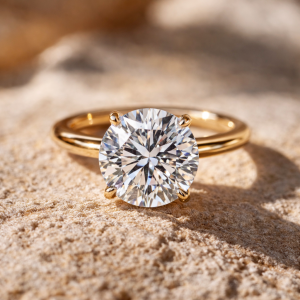
They’re billions of years old. Every one of them formed deep inside the earth under extreme pressure over an unimaginable amount of time. No 2 are identical. The one you choose existed before humans, before history — and it will outlast both of you.
For a lot of couples, that matters. The ring becomes more than a ring.
Natural diamonds also hold their value differently. They’re finite. Lab diamonds are not. That’s not an opinion — it’s supply and demand.
Practically speaking, here’s what I’m seeing for clients today compared to a few years ago:
This window won’t last forever. As lab diamond prices continue dropping, the market will eventually re-correct for natural stones. It always does.
A few things I always tell clients:
1. Always buy certified. GIA or IGI. No exceptions. The certificate tells you exactly what you’re getting — cut, colour, clarity, carat. Without it, you’re guessing.
2. Cut matters more than size. A well-cut 1-carat diamond outshines a poorly cut 1.5-carat every time. Don’t chase the number. Chase the light.
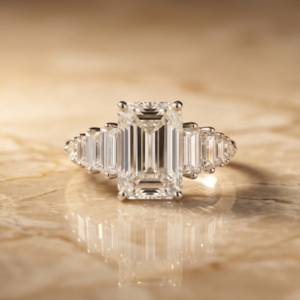
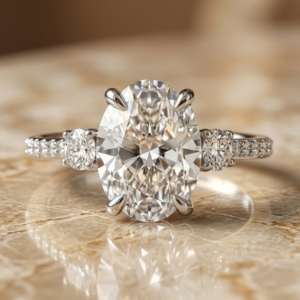
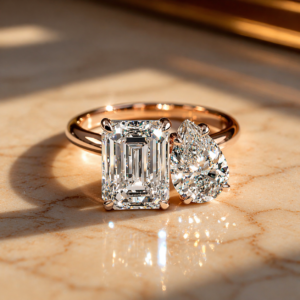
3. Shape is personal. Oval is elongating. Round is classic. Emerald cut is architectural. Each one suits a different hand and style. I always ask: what does she wear every day?
4. Don’t overpay for colour you can’t see. In most settings, the difference between a D and an F colour is invisible to the naked eye. I’ll show you side by side — you’ll understand immediately.
We source natural diamonds starting with our own production — my father is a veteran diamond manufacturer with decades of experience. If we have the stone that fits your specs, you’re getting it directly from the source.
If we don’t have the specific diamond you’re looking for, I go out to a global network to find it — pulling from hundreds of options until I find the right match for your style and budget.
The process is simple:
→ You tell me her style, your budget, and any shape preferences
→ I come back with 2–3 hand-picked options with videos and certificates
→ You choose. I design the setting. We build it.
→ 2–3 weeks later, the ring is done.
Most clients do the whole process remotely. No pressure to visit in person.
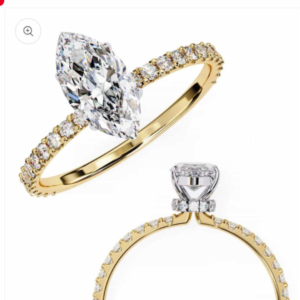
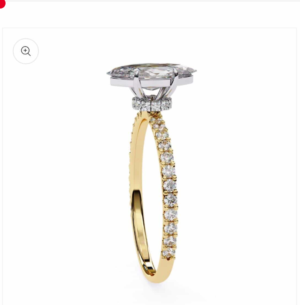
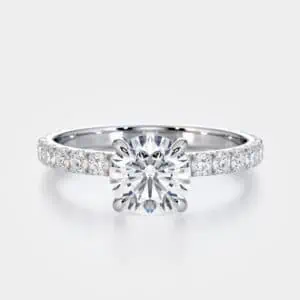
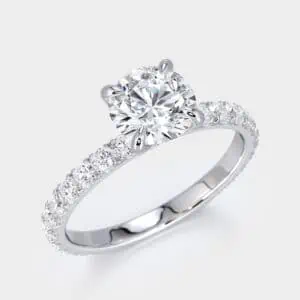
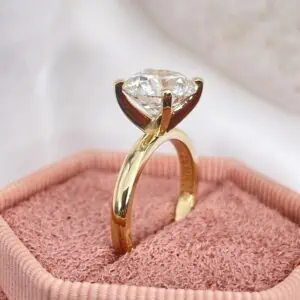
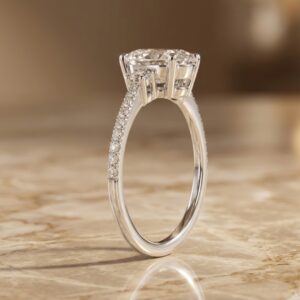
Browse our natural diamond engagement rings →
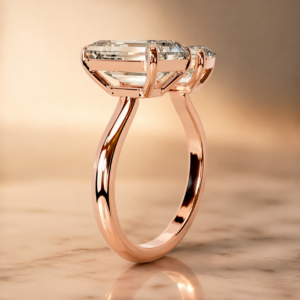
Or if you want something truly unique: design your own custom ring →
The most important thing is that you feel confident in what you’re choosing.
If you have questions — about diamonds, about the process, about anything — just send me a message. No cost, no obligation. Just honest guidance from someone who’s been doing this his whole life.
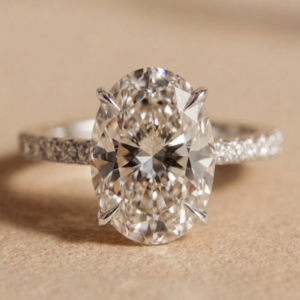
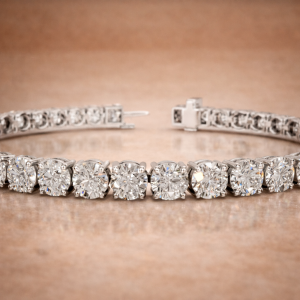
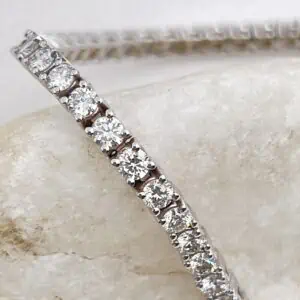
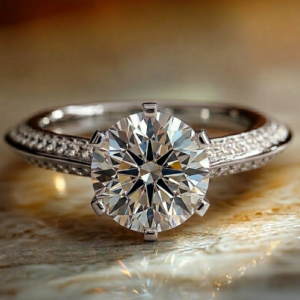
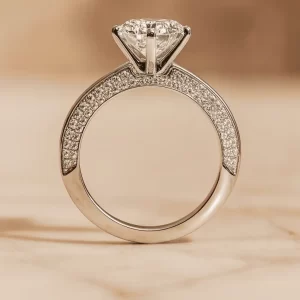
Find Your Size & Ring Match with Our Guide Size Chart
If you would like to measure your ring size immediately the quickest ways and with an accurate fit – you can do it with our Ring Size Chart here.
The way to quickly get your measurements is either going to the nearest jewelry shop and ask them to measure you, or to buy a Ring Sizer Measuring Gauge with a 2-day delivery to the US!
Then you can match your measurement to the size chart below to get your exact ring size.
A few factors we recommend to consider for the perfect measure:
Still not sure what your size is or what to choose for your love one? We’re here to help!
| MM | Inches | MM | Inches | UK/AU | US & Canada & Mexico | France | Germany & Russia & Ukraine & Asia | India & China & Japan & South America | Italy & Spain & Netherlands & Switzerland |
| 14.05 | 0.553 | 44.14 | 1.74 | F | 3 | 44 | 14 | 4 | 4 |
| 14.25 | 0.561 | 44.77 | 1.76 | F 1/2 | 3.25 | 44.625 | 14.25 | 4.5 | 4.625 |
| 14.45 | 0.569 | 45.4 | 1.79 | G | 3.5 | 45.25 | 14.5 | 5 | 5.25 |
| 14.65 | 0.577 | 46.02 | 1.81 | H | 3.75 | 45.875 | 14.75 | 6 | 5.875 |
| 14.86 | 0.585 | 46.68 | 1.84 | H 1/2 | 4 | 46.5 | 15 | 7 | 6.5 |
| 15.04 | 0.592 | 47.25 | 1.86 | I | 4.25 | 47.125 | 15.25 | 7.5 | 7.125 |
| 15.27 | 0.601 | 47.97 | 1.89 | I 1/2 | 4.5 | 47.75 | 15.5 | 8 | 7.75 |
| 15.53 | 0.611 | 48.79 | 1.92 | J 1/4 | 4.75 | 48.375 | — | 8.5 | 8.375 |
| 15.7 | 0.618 | 49.32 | 1.94 | J 1/2 | 5 | 49 | 15.75 | 9 | 9 |
| 15.9 | 0.626 | 49.95 | 1.97 | K 1/4 | 5.25 | 49.625 | 16 | 9.5 | 9.625 |
| 16.1 | 0.634 | 50.58 | 1.99 | L | 5.5 | 50.25 | 16.25 | 10 | 10.25 |
| 16.3 | 0.642 | 51.21 | 2.02 | L 1/4 | 5.75 | 50.875 | — | 11 | 10.875 |
| 16.51 | 0.65 | 51.87 | 2.04 | M | 6 | 51.5 | 16.5 | 12 | 11.5 |
| 16.71 | 0.658 | 52.5 | 2.07 | M 1/2 | 6.25 | 52.125 | 16.75 | 12.5 | 12.125 |
| 16.92 | 0.666 | 53.16 | 2.09 | N | 6.5 | 52.75 | 17 | 13 | 12.75 |
| 17.13 | 0.674 | 53.82 | 2.12 | N 1/2 | 6.75 | 53.375 | — | 13.5 | 13.375 |
| 17.35 | 0.683 | 54.51 | 2.15 | O | 7 | 54 | 17.25 | 14 | 14 |
| 17.45 | 0.687 | 54.82 | 2.16 | O 1/2 | 7.25 | 54.625 | 17.5 | 14.5 | 14.625 |
| 17.75 | 0.699 | 55.76 | 2.2 | P | 7.5 | 55.25 | 17.75 | 15 | 15.25 |
| 17.97 | 0.707 | 56.45 | 2.22 | P 1/2 | 7.75 | 55.875 | — | 15.5 | 15.875 |
| 18.19 | 0.716 | 57.15 | 2.25 | Q | 8 | 56.5 | 18 | 16 | 16.5 |
| 18.35 | 0.722 | 57.65 | 2.27 | Q 1/2 | 8.25 | 57.125 | 18.25 | 16.5 | 17.25 |
| 18.53 | 0.729 | 58.21 | 2.29 | Q 3/4 | 8.5 | 57.75 | 18.5 | 17 | 17.75 |
| 18.69 | 0.736 | 58.72 | 2.31 | R 1/4 | 8.75 | 58.375 | 18.75 | 17.5 | 18.375 |
| 18.89 | 0.748 | 59.34 | 2.35 | R 3/4 | 9 | 59 | 19 | 18 | 19 |
| 19.22 | 0.757 | 60.38 | 2.38 | S 1/4 | 9.25 | 59.625 | 19.25 | 18.5 | 19.625 |
| 19.41 | 0.764 | 60.98 | 2.4 | S 3/4 | 9.5 | 60.25 | 19.5 | 19 | 20.25 |
| 19.62 | 0.772 | 61.64 | 2.43 | T 1/4 | 9.75 | 60.875 | 19.75 | 19.5 | 20.875 |
| 19.84 | 0.781 | 62.33 | 2.45 | T 1/2 | 10 | 61.5 | 20 | 20 | 21.25 |
| 20.02 | 0.788 | 62.89 | 2.48 | U | 10.25 | 62.125 | 20.25 | 21 | 22.125 |
| 20.2 | 0.797 | 63.46 | 2.5 | U 1/2 | 10.5 | 62.75 | 20.5 | 22 | 22.75 |
| 20.44 | 0.805 | 64.21 | 2.53 | V 1/4 | 10.75 | 63.375 | — | 22.5 | 23.375 |
| 20.68 | 0.814 | 64.97 | 2.56 | V 1/2 | 11 | 64 | 20.75 | 23 | 24 |
| 20.85 | 0.821 | 65.5 | 2.58 | W 1/4 | 11.25 | 64.625 | — | 23.5 | 24.625 |
| 21.08 | 0.83 | 66.22 | 2.61 | W 3/4 | 11.5 | 65.25 | 21 | 24 | 25.25 |
| 21.24 | 0.836 | 66.73 | 2.63 | X 1/4 | 11.75 | 65.875 | — | 24.5 | 25.875 |
| 21.49 | 0.846 | 67.51 | 2.66 | Y | 12 | 66.5 | 21.25 | 25 | 26.5 |
| 21.69 | 0.854 | 68.14 | 2.68 | Y 1/2 | 12.25 | 67.125 | 21.5 | 25.5 | 27.125 |
| 21.89 | 0.862 | 68.77 | 2.71 | Z | 12.5 | 67.75 | 21.75 | 26 | 27.75 |
| 22.1 | 0.87 | 69.43 | 2.73 | Z +1/2 | 12.75 | 68.375 | — | 26.5 | 28.375 |
| 22.2 | 0.75 | 70 | 2.74 | Z+1 | 13 | 69 | 22 | 27 | 29 |
Simply enter LAUNCH10 at checkout to redeem your discount. Don’t miss out on this limited time offer!